회절 격자: 주문형 회절 광을 위한 정확한 반복 구조물
회절 마이크로 및 나노 광학 소자의 설계 및 생산 분야의 개척자로서 25년 이상의 업력을 보유한 Jenoptik은 귀하의 격자 주문형 적용 분야에 회절 성능이 우수한 솔루션을 제공할 수 있습니다.
Have a look at the most common types of diffractive gratings, we offer:
Binary Gratings
- Simplest type of diffractive grating, consisting of a periodic structure with two levels of depth
- Used for applications such as beam splitting and wavelength division multiplexing
Multilevel Gratings
- Similar to binary gratings, but they have multiple levels of depth
- Used for applications such as beam splitting and wavelength division multiplexing
Blazed Gratings
- Designed to maximize the diffraction efficiency of a specific order
- Used for applications such as spectroscopy and wavelength division multiplexing
Pulse Compression Gratings
- Designed to compress laser pulses in the time domain
- For applications such as ultrafast laser processing and spectroscopy
Maximize efficiency and accuracy of your demanding application
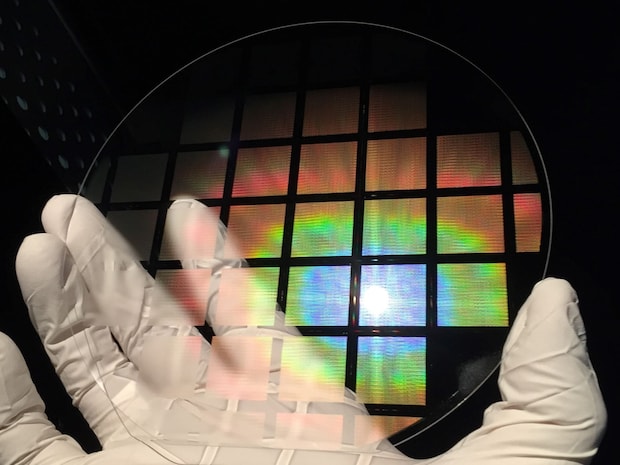
Leverage our expertise and benefit from our comprehensive capabilities in designing and manufacturing high-performance diffraction gratings, that provide:
- Optimized beam quality
- Highest damage thresholds
- Outstanding efficiency
- Made for high power applications
- Low stray light
- Transmission or reflection available
- For various wavelengths
Explore the possibilities and connect directly with our experts!
Product recommendations

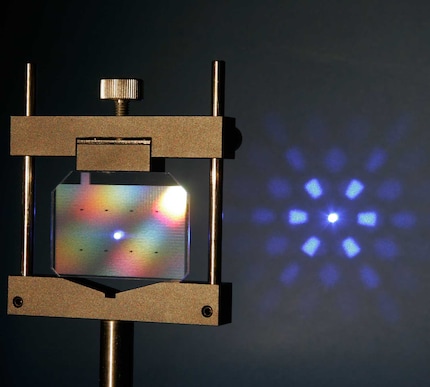
Jenoptik competence for photonic systems

Discover the power of Jenoptik’s broad optical technology portfolio - a unique combination of classic optics, advanced micro-optics, laser sources, and complete laser systems. This unparalleled range makes Jenoptik one of the few companies worldwide offering such comprehensive photonics expertise.
By combining technologies across multiple photonics disciplines, Jenoptik creates integrated optical modules and systems designed specifically for your applications. These synergies ensure optimized performance, precision, and efficiency.
From concept to completion, Jenoptik delivers everything from a single source:
- Optical and microoptical design
- Opto-mechanical design
- Fabrication
- Test and measurement
- System design and integration
Microoptics fabrication technologies: flexible and versatile
At Jenoptik, we offer a wide range of microoptics fabrication technologies that cater to diverse material types and sizes. Our expertise in microoptics manufacturing enables us to produce high-precision optical components and systems for various applications, including optical communication, life sciences, industrial automation, and more.

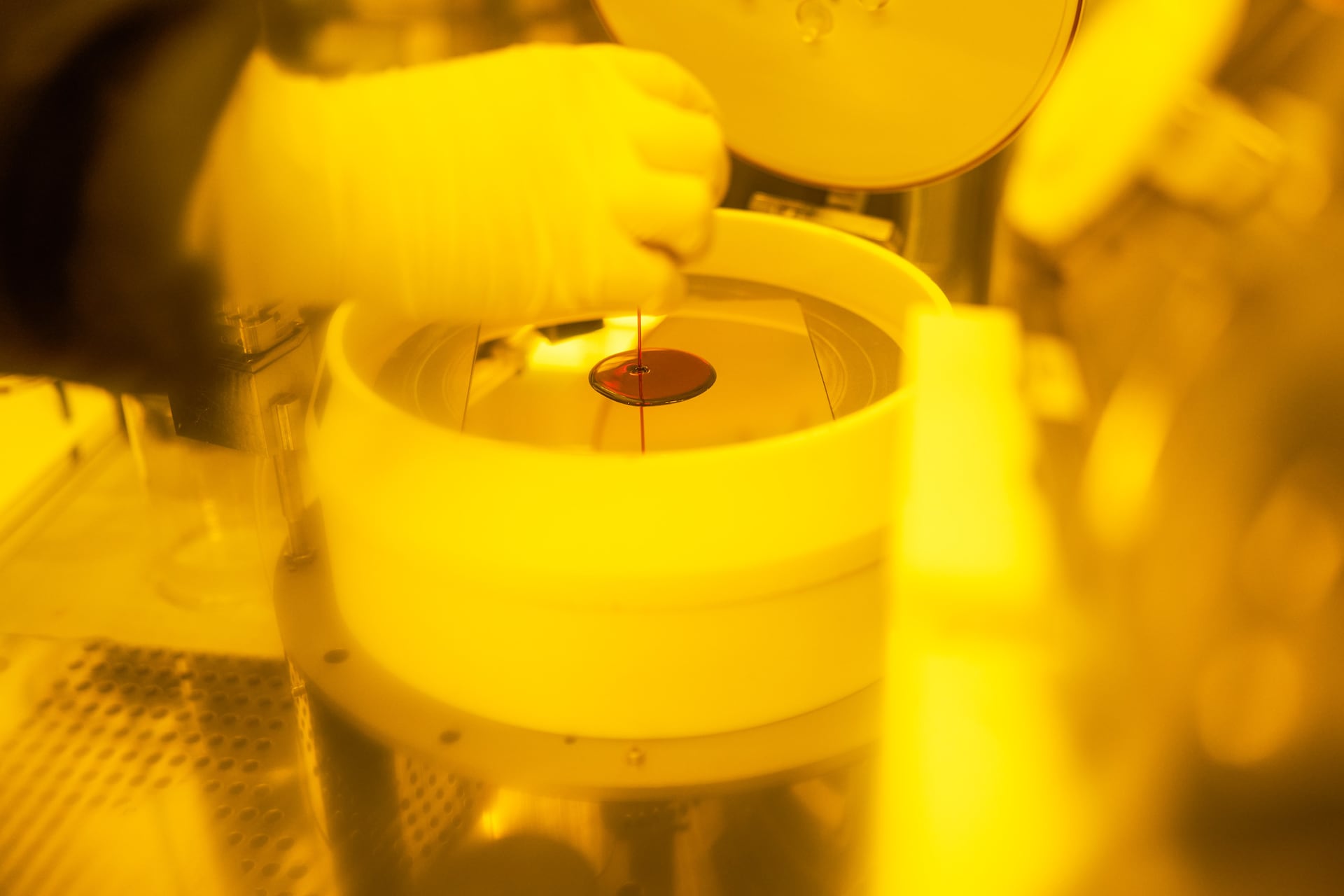
- Glass: Fused silica and other types of glass are used for producing microoptics components, such as lenses, prisms, and beam splitters.
- Semiconductors: Silicon, germanium, and other semiconductor materials are used for fabricating microoptics components, such as photonic crystals, waveguides, and optical sensors.
- Polymers: Polyimide, PMMA, and other polymers are used for producing microoptics components, such as optical fibers, waveguides, and micro-lenses.
- Crystals: Quartz, lithium niobate, and other crystals are used for fabricating microoptics components, such as optical resonators, filters, and modulators.
- Feature level: Below the classical optical fabrication technologies, from millimeter down to sub-micrometer resolution, ideal for applications like optical sensing, spectroscopy, and microscopy.
- Component level – From millimeter to centometer-scale: Our technologies can produce microoptics components with sizes ranging from a few millimeters to several centimeters, suitable for applications like optical communication, lidar, and industrial automation.
- Available substrate geometries: various wafer and reticle formats possible
Jenoptik's comprehensive portfolio of fabrication technologies offers customers a one-stop-shop solution, providing flexibility, adaptability, and expertise to reduce development time, improve product performance, and decrease production costs.
Our microoptics fabrication technologies include:
- Lithography: We use various lithography techniques, such as UV lithography, electron beam lithography, and nanoimprint lithography, to pattern microoptics components on different materials.
- Etching: Our etching technologies (including dry and wet processes) enable the precise removal of material to create microoptics structures.
- Deposition: We use various deposition techniques, such as sputtering, evaporation, and chemical vapor deposition, to deposit thin films and create microoptics components.
- Assembly: Our assembly technologies, including bonding, aligning, and packaging, enable the integration of microoptics components into larger systems.
Choosing the right microoptics - what to know about diffraction gratings
How it works
- Incident light: Light from a source, such as a laser or a white light, is directed towards the diffraction grating.
- Diffraction: As the light passes through the grating, it encounters the narrow slits or grooves, which cause the light to bend, or diffract, at specific angles.
- Interference: The diffracted light waves from each slit or groove interfere with each other, creating a pattern of constructive and destructive interference.
- Spectral separation: The interference pattern results in the separation of the light into its constituent colors, or spectral components, with each color being diffracted at a specific angle.
- Dispersion: The diffracted light is dispersed, or spread out, across a range of angles, creating a spectrum of colors.
Key characteristics
- Grating period: The distance between two adjacent slits or grooves.
- Grating spacing: The distance between two adjacent grating lines.
- Diffraction angle: The angle at which the light is diffracted.
- Spectral resolution: The ability of the grating to separate closely spaced spectral lines.
Types of diffraction gratings
- Transmission gratings: These gratings consist of parallel, regularly spaced grooves or slits that are incorporated into a transparent material such as glass or plastic. They split the incident light into different colors by influencing the wavelength of the light.
- Reflection gratings: Unlike transmission gratings, reflection gratings are applied to a reflective surface such as metal or a mirror. They reflect the light and split it into different colors.
- Blazed gratings: These gratings have a special surface structure that is designed to direct light in a specific direction. They are used in laser technology and optical communication.
Applications
- Spectroscopy: Diffraction gratings are used in spectroscopy to analyze the spectral properties of light, such as wavelength, intensity, and polarization.
- Optical communication: Gratings are used in optical communication systems to multiplex and demultiplex signals, allowing for high-speed data transmission.
- Laser technology: Gratings are used to disperse and manipulate laser light, enabling applications such as laser material processing and spectroscopy.
- Astronomy: Gratings are used in telescopes to analyze the spectral properties of light from distant stars and galaxies.


+81 045 670-9141